
Guide
What is pay per call? A plain-English guide for affiliates and advertisers
By the LeadsRefer team · Updated October 7, 2026 · 11 min read
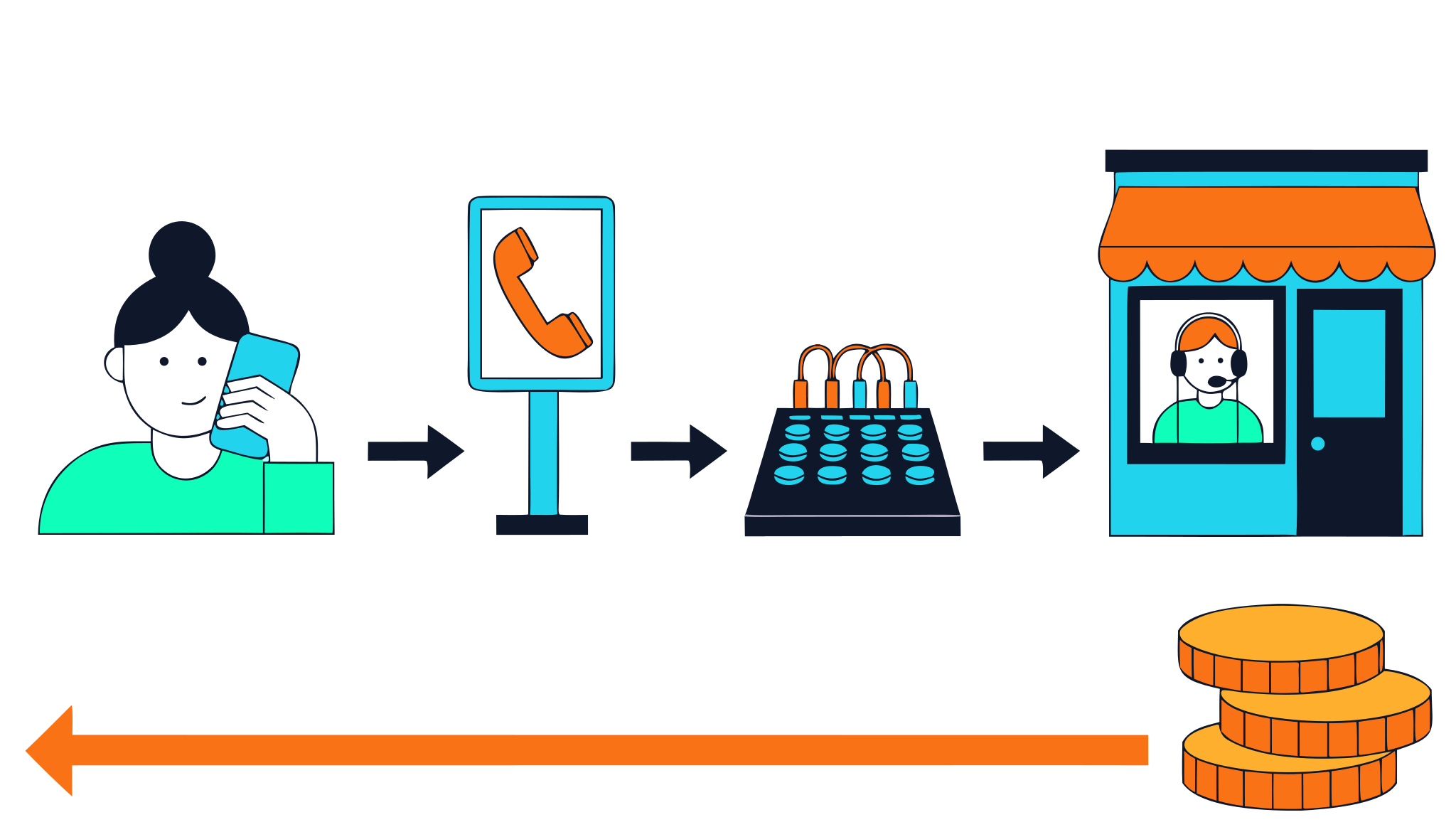
Pay per call is a way of buying and selling customers by phone. An advertiser pays for each phone call it receives from a consumer who found it through an affiliate's traffic, instead of paying for a click or a form fill. If the call meets agreed rules, such as a minimum length and the right location, the advertiser pays the network, and the network pays the affiliate who sent it.
This guide explains how that works from start to finish: who is involved, what makes a call count, how payouts are set, how pay per call compares with pay per click and pay per lead, what to watch for on compliance and fraud, and how to get started on either side.
How pay per call works, step by step
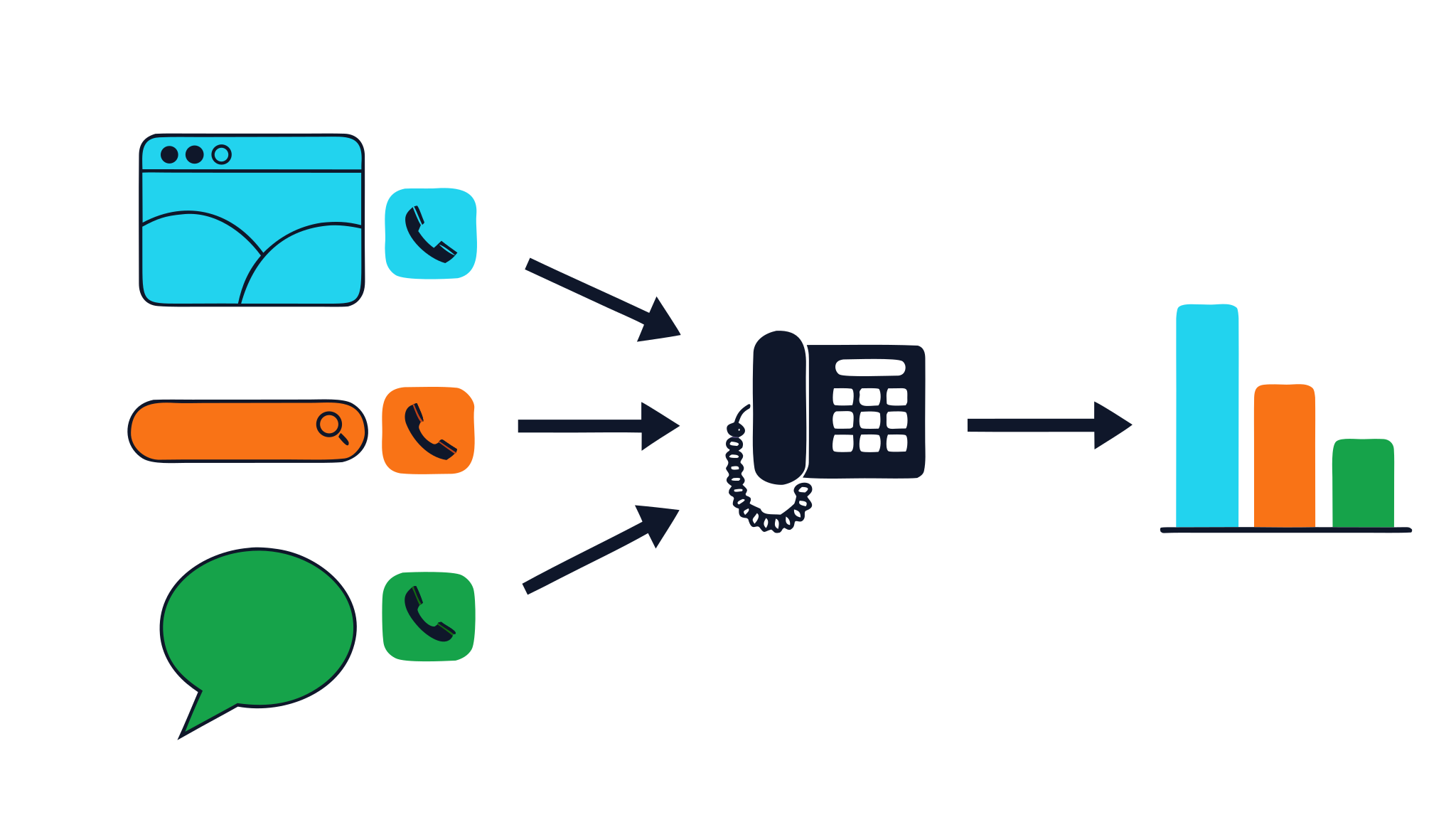
- A consumer sees an ad, a search result or a web page that carries a phone number. That number is a tracking number, unique to the affiliate and to the offer.
- The consumer calls. The call platform forwards the call to the advertiser's destination, which might be a sales team, a call center or a local business.
- The platform records the facts of the call: when it started, how long it lasted, where it came from and which affiliate sent it.
- The call is checked against the offer's rules. If it qualifies, it becomes a billable conversion.
- The advertiser is charged the agreed amount, and the affiliate is credited a payout once any payment window has passed.
The tracking number is what makes the whole model work. Because each affiliate gets their own number for each offer, every call can be attributed to the traffic that produced it, without relying on cookies, forms or a particular website.
Who is involved
- The advertiser, also called the buyer, is the business that wants calls: a roofer, an insurance agency, a debt-relief company, a moving firm. It sets the payout and the rules a call must meet.
- The affiliate, also called the publisher, is the person or company that creates the traffic: a website, a content site, a search or social campaign. It earns a payout for each qualifying call.
- The network sits in the middle. It runs the marketplace, issues the tracking numbers, measures and checks the calls, bills the advertiser and pays the affiliate.
- The consumer is the person who makes the call. Everything in the model depends on that call being a real, willing consumer who wants the service.
What makes a call qualified
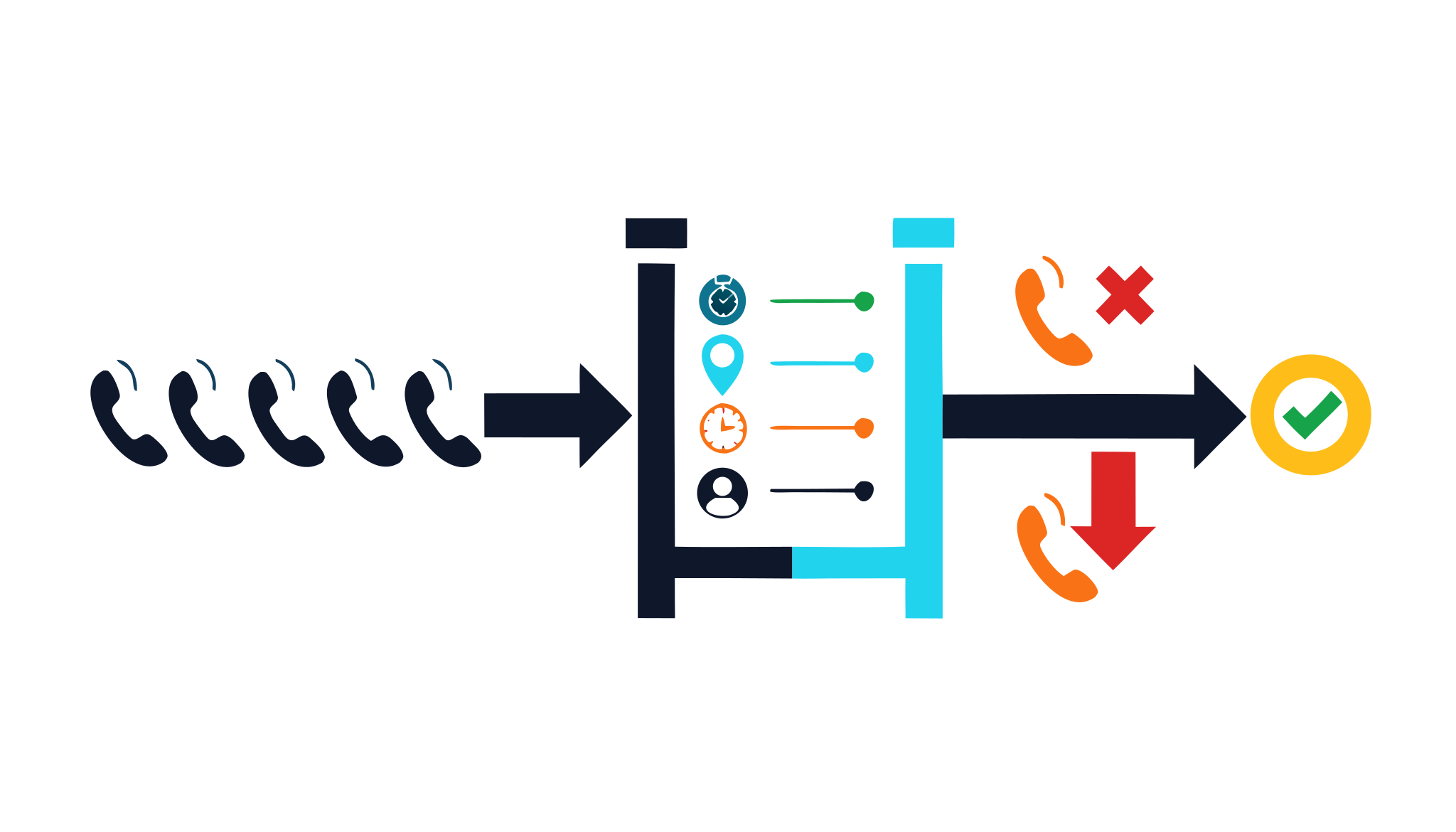
Not every call is billable. A call is paid only when it meets the rules set on the offer. The most common rules are:
- Minimum duration. A very short call is usually a wrong number or a hang-up, so offers set a minimum length before a call counts. The right threshold depends on the vertical and on how long a real conversation takes.
- Geography. The caller has to be in an area the advertiser serves. A roofer in Texas cannot use a call from another state.
- Hours. Calls outside the advertiser's opening hours cannot be answered, so they rarely qualify.
- Uniqueness. The same person calling back repeatedly should not be paid for over and over. Networks usually count the first qualifying call from a caller within a window and ignore the rest.
- Intent. Some buyers also require that the caller asked for the service, for example a quote. This is harder to measure and is usually settled by reviewing the call.
These rules matter more than the headline payout. A high payout attached to a strict rule can be worth less than a lower payout with a fair one, so read the rule before you judge the number. On LeadsRefer the payout, geo and call rules are shown on every offer page, and a repeat caller is paid once within a set window.
How payouts are set
The most common model is a fixed amount for each qualified call. Some offers pay more for longer calls, pay in tiers, or add a bonus for volume or quality, but a flat per-call rate is the starting point. What moves the number:
- The value of a customer in that category. A call that can become a large job or a long-term policy is worth more to the advertiser than one that becomes a small repair.
- How strict the qualification rules are. Tighter rules mean fewer billable calls, which usually goes with a higher rate.
- Geography and competition. Calls from expensive or crowded markets can pay differently from the rest.
- Exclusivity. A call sent to one buyer is worth more than one sold to several.
- The advertiser's capacity. Daily and weekly caps limit how many calls an advertiser will pay for.
A published payout is a rate, not a promise of income. What an affiliate actually earns depends on how many calls their traffic produces and how many of those qualify.
Pay per call compared with pay per click, pay per lead and pay per sale
| Model | You are paid for | Suits | Main risk |
|---|---|---|---|
| Pay per click | Each visit to an advertiser's page | Awareness and low-cost testing | A click is not a customer, and much traffic never converts |
| Pay per lead | A completed form or sign-up | Categories where people are happy to type their details | Lead quality varies, and forms can be faked |
| Pay per call | A phone call that meets the offer's rules | Urgent or high-value decisions where people prefer to talk | Whether a call counts depends on its rules and on how well it is answered |
| Pay per sale | A completed purchase | Products with a simple online checkout | A longer wait, and results depend on the advertiser's own conversion |
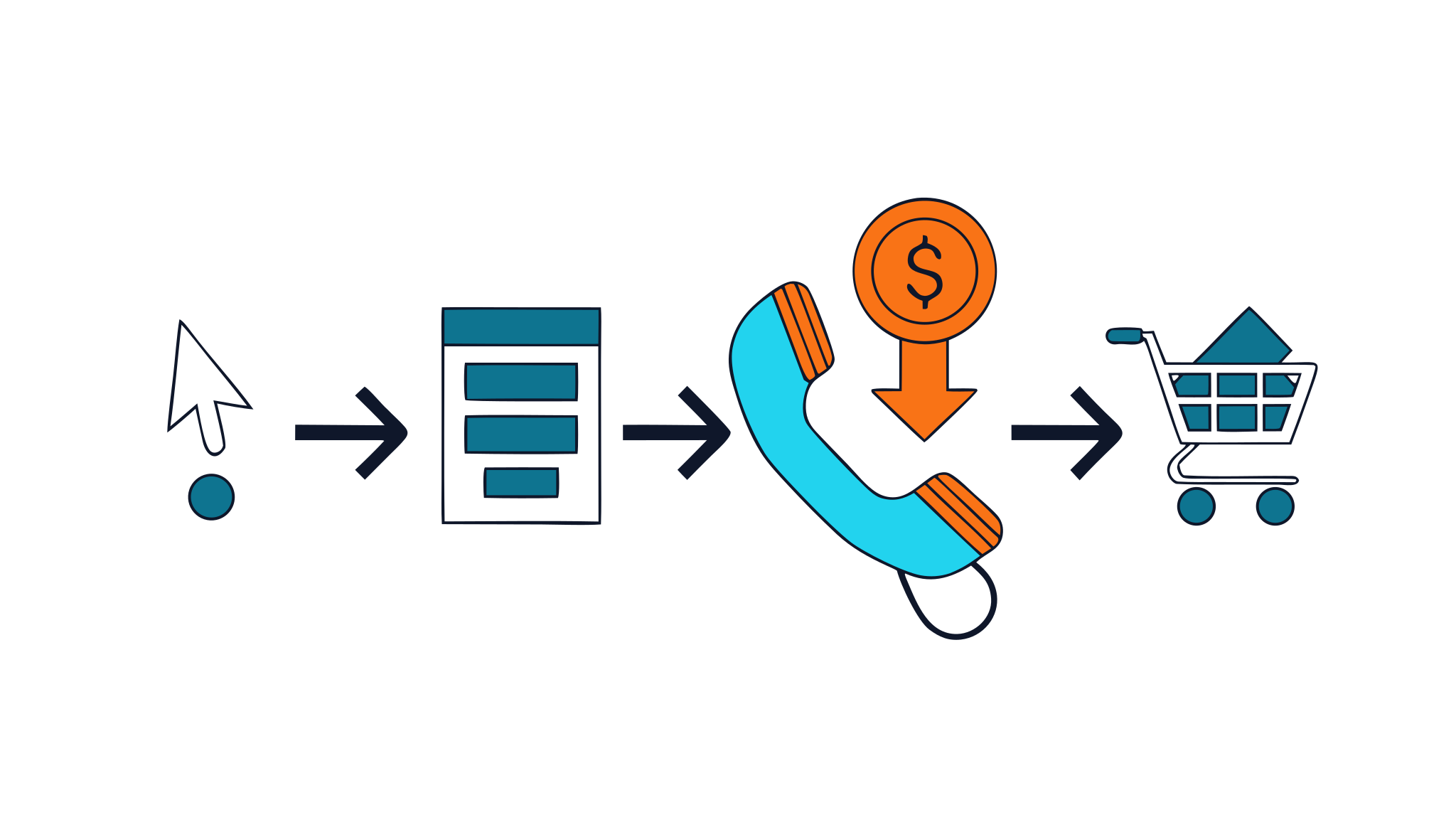
A phone call is often a stronger signal of intent than a click or a form, because the consumer has chosen to speak to a person rather than browse. The trade-off is that a call is only worth something if someone answers it well.
Where pay per call works best
Pay per call fits categories where a conversation closes the deal and the decision is urgent or high in value. In practice that means:
- Home services such as roofing, plumbing, HVAC, pest control, water damage restoration and moving, where the customer has a problem to fix now.
- Insurance, including home, auto, life and final expense, where people want to talk a policy through with a licensed person.
- Financial services such as debt relief and tax relief, where callers want to understand their options before committing.
- Other high-value local or professional services, many of which are tightly regulated.
The categories with a live campaign on LeadsRefer at any moment are listed on the verticals page, read straight from the catalogue.
Traffic that tends to work
- Search and SEO content aimed at people who are ready to act, such as the problem they are searching for plus a clear phone number.
- Comparison and explainer pages that help someone decide, with a visible call prompt.
- Paid search and paid social, where the platform's rules allow click-to-call or call-focused ad formats.
- Local and mobile traffic, because people dial from their phones.
Traffic that does not work, and often gets an affiliate removed: sending callers from outside the offer's geography, incentivized calls, misleading ads, and any claim the advertiser has not approved.
Compliance basics
This is general information, not legal advice. Check the rules that apply to you and your advertisers.
- Call recording. Laws on recording calls vary by state, and some require every party's consent. Recording and its disclosure are normally handled by the advertiser and the call platform. On LeadsRefer, recording is off by default for each offer and is only switched on where the advertiser has confirmed lawful consent.
- Advertising claims. Do not promise outcomes you cannot control, do not impersonate an agency, insurer or government body, and use only the claims the advertiser has approved. Regulated categories carry their own rules, for example licensing for insurance and federal rules on debt-relief marketing.
- Contacting consumers. The rules on calling and texting consumers, including the Telephone Consumer Protection Act, are strictest for outbound calls and texts. If your traffic involves SMS, a dialer or call-center outreach, you need documented consent. LeadsRefer asks for the consent wording when an offer application includes that kind of traffic.
Fraud and call quality
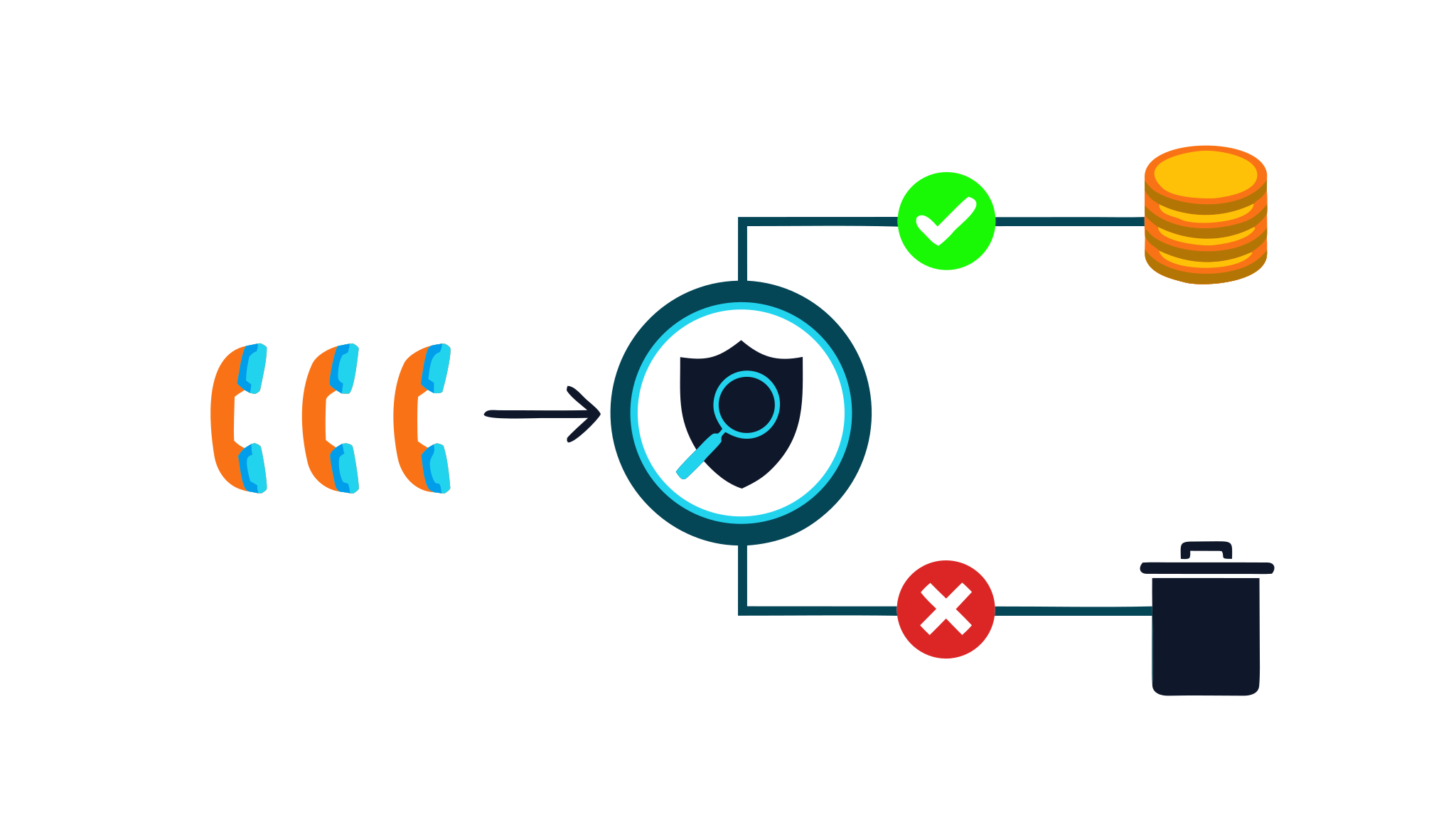
Pay per call attracts the same abuse as any performance model, in call-shaped forms:
- Repeat or duplicate calls from the same person to collect more than one payout.
- Very short calls, or calls that are held open just long enough to pass a threshold.
- Calls from outside the geography, or from spoofed or automated numbers.
- Traffic that was paid for or incentivized rather than genuinely interested.
Networks respond with minimum durations, repeat-caller windows, geography checks, daily and weekly caps, and review of recorded or logged calls. A network that cannot explain how it filters bad calls is a risk to both sides. How LeadsRefer checks conversions is described on the features page.
How pay per call works on LeadsRefer
- Every affiliate application is reviewed by hand, and each offer has its own approval, where you describe your traffic sources and creative.
- Each approved affiliate gets a dedicated tracking number for each offer, so calls are attributed to you and to nothing else.
- Each offer page publishes the payout, the geography and the payment terms, plus the call-length rule where the offer sets one.
- Advertisers apply and are reviewed by hand, then prepay a balance or buy on invoiced Net terms. Campaigns are reviewed before traffic goes live.
- The current payment terms and the minimum payout are on the network profile, which reads them from live configuration.
How to get started
As an affiliate (the full walkthrough covers each step):
- Read an offer page for the payout, geography and call rule, and check the traffic you can send fits them.
- Apply as an affiliate. Then apply to the offers you want to promote.
- Once you are approved on an offer, collect your tracking number from your dashboard.
- Send traffic that matches the offer's geography and hours, using only approved claims, and test your number before you spend.
- Review your calls and conversions, and adjust sources that bring calls that do not qualify.
As an advertiser, apply to buy calls. Once approved, you choose how you pay, submit a campaign with its payout and rules, and answer the calls promptly. Buying calls on LeadsRefer explains the process in more detail.
Common mistakes
Affiliates tend to go wrong by:
- Judging an offer by its payout and not its qualification rule.
- Sending traffic from outside the geography or hours the advertiser covers.
- Burying the phone number, or never testing that it rings.
- Overpromising in ads, which causes complaints and rejected traffic.
Advertisers tend to go wrong by setting rules that do not match how real calls go, leaving calls unanswered or slow to answer, and not giving affiliates feedback on what qualifies. Affiliates stop sending calls to a buyer who does not pick up.
Frequently asked questions
- What is pay per call in simple terms?
- Pay per call is a performance model where an advertiser pays for a phone call from a consumer instead of for a click or a form. The call has to meet the offer's rules, such as a minimum length and the right location, before it counts.
- Is pay per call the same as lead generation?
- It is one form of it. In lead generation the lead can be a form submission, a sign-up or a call. In pay per call the lead is a live phone call, and the advertiser pays when that call qualifies.
- How much do pay per call affiliates earn?
- It depends on the payout rate of the offer, how many calls your traffic produces and how many of them qualify. Payout rates are published on each offer page, but no honest figure can be given for what an affiliate will earn, because it depends on their traffic.
- Do I need a website to do pay per call?
- No, but you need a way to put the number in front of consumers. Many affiliates use a website or content, and others run paid campaigns that lead straight to a call. Each approved offer gives you your own tracking number, so attribution does not depend on a site.
- What is a call tracking number?
- A phone number that forwards to the advertiser but is unique to one affiliate on one offer. Because the number identifies the source, every call can be attributed and measured.
- How are fake or duplicate calls handled?
- Through the offer's qualification rules and checks such as minimum call length, geography, daily and weekly caps, and a repeat-caller window so the same person is not paid twice. See the features page for how LeadsRefer checks conversions.
Keep reading
- How to start in pay per call as an affiliate: from sign-up to your first payoutA step-by-step guide to becoming a pay per call affiliate: sign up, get approved, apply to offers, get your tracking number, run traffic and get paid.
- Pay per call marketing: a buyer's guide for advertisersHow to buy phone calls from affiliates: set a payout, write fair call rules, answer well, measure what matters, and avoid fraud and compliance trouble.
Ready to start?
Browse the live offers to see each payout, geography and call rule, then apply as an affiliate. If you buy calls, apply as an advertiser.